

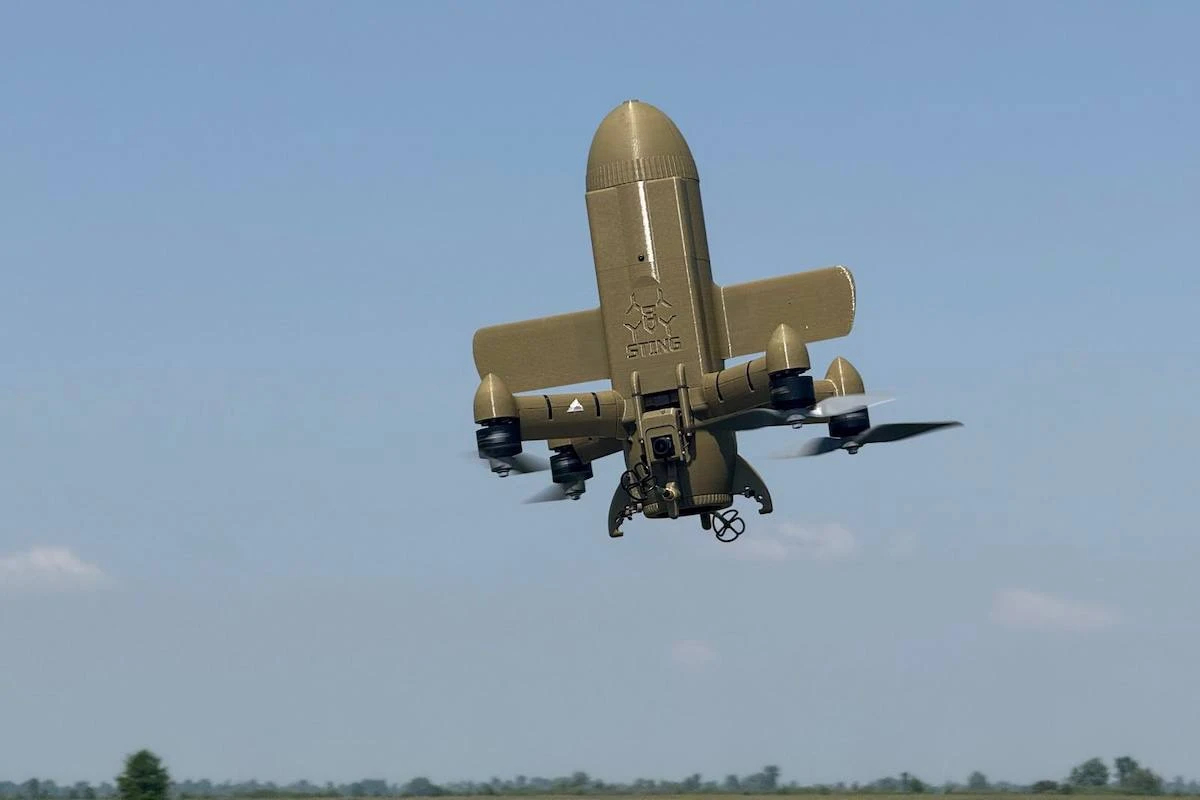
Ukrainian armed forces have achieved a remarkable milestone in aerial defense operations, successfully intercepting and destroying a Russian reconnaissance unmanned aerial vehicle at an altitude exceeding 7 kilometers using the domestically developed Sting drone system. This achievement represents a new operational ceiling record for the Sting platform and demonstrates the rapidly advancing capabilities of Ukraine’s indigenous defense industry in the ongoing conflict.
The successful engagement highlights the growing sophistication of Ukrainian drone warfare technology, which has become a defining feature of the conflict since Russia’s full-scale invasion began in February 2022. High-altitude interception capabilities are particularly valuable for countering reconnaissance drones that typically operate at significant elevations to avoid detection and gather intelligence over large areas of territory.
The Sting System: Ukraine’s Homegrown Air Defense Solution
The Sting drone represents one of several innovative unmanned systems developed by Ukraine’s defense sector in response to wartime demands. Unlike many other drone systems that rely on imported components or foreign designs, the Sting has been engineered specifically to address the unique challenges faced by Ukrainian forces. The system is designed as an interceptor drone capable of engaging enemy aerial targets, filling a crucial gap in air defense capabilities that traditional surface-to-air missile systems cannot always address cost-effectively.
Operating at altitudes above 7 kilometers requires sophisticated engineering solutions, including efficient propulsion systems, reliable communication links that can function over extended ranges, and precise targeting mechanisms. The fact that Ukrainian engineers have achieved this capability under wartime conditions, with all the associated resource constraints and security challenges, speaks to the remarkable adaptability and technical prowess of the nation’s defense industry. Military analysts have noted that interceptor drones offer several advantages over traditional air defense systems, including lower operational costs per engagement and reduced risk to human operators.
Strategic Importance of Counter-Reconnaissance Operations
Russian reconnaissance drones play a critical role in Moscow’s military operations, providing real-time intelligence on Ukrainian troop movements, identifying targets for artillery and missile strikes, and assessing battle damage. By operating at high altitudes, these reconnaissance platforms can survey vast areas while remaining relatively safe from many ground-based air defense systems. The ability to neutralize these assets directly impacts Russia’s operational effectiveness on the battlefield.
The destruction of reconnaissance drones has become an increasingly important aspect of the conflict, as both sides rely heavily on unmanned systems for situational awareness. Ukraine’s success in developing effective counter-drone capabilities has forced Russian operators to adapt their tactics, often at the cost of reduced intelligence gathering effectiveness. Military experts estimate that denying the enemy reconnaissance capability can significantly degrade the accuracy of artillery fire and reduce the effectiveness of coordinated military operations.
The Evolution of Drone Warfare in Ukraine
The conflict in Ukraine has fundamentally transformed modern understanding of drone warfare, with both sides deploying thousands of unmanned systems for various purposes including reconnaissance, strike missions, and electronic warfare. Ukraine has emerged as a global leader in innovative drone applications, developing everything from modified commercial quadcopters for dropping grenades to sophisticated long-range strike platforms capable of hitting targets deep inside Russian territory. This latest achievement with the Sting system adds high-altitude interception to Ukraine’s growing arsenal of drone capabilities.
International defense observers have closely studied the lessons emerging from Ukraine’s drone operations, with many nations now accelerating their own unmanned systems development programs based on what they have witnessed. The relatively low cost of drone systems compared to traditional military aircraft and missiles, combined with their effectiveness in various combat roles, has sparked what some analysts describe as a revolution in military affairs. Ukraine’s continued innovation in this domain not only serves its immediate defense needs but also positions the country as a potential future exporter of proven combat drone technology.
Expert Opinion: This altitude record demonstrates that Ukrainian defense manufacturers have successfully miniaturized high-performance propulsion and guidance systems under extreme wartime pressure, achieving capabilities that typically require years of peacetime development. The successful 7-kilometer interception suggests Ukraine is developing a layered drone defense architecture that could prove more cost-effective than traditional air defense systems. As drone technology continues to evolve rapidly on both sides, we can expect the altitude ceiling for such engagements to increase further, potentially reaching 10 kilometers or more within the next 12-18 months.